

Top Go Karts for 8-Year-Olds: Ultimate Guide to Fun, Fast & Safe Rides

So, you're thinking about a go-kart for an 8-year-old. It's a brilliant idea. The real challenge is finding that sweet spot between heart-pounding fun and wrap-them-in-cotton-wool safety. This guide is here to help you nail it, whether you're planning on buying their very own go kart for 8 year olds or gifting an unforgettable day out at the track – which, let's be honest, is often the smarter, safer, and less stressful route.
Your Guide to Go Karts for 8 Year Olds
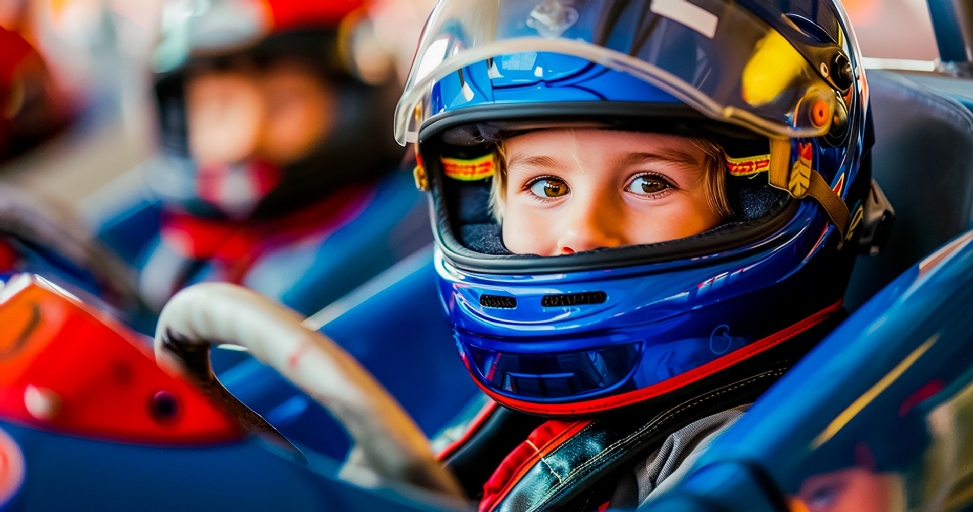
The vision is a powerful one: your child, beaming with pride, zipping around in their very own machine. For most eight-year-olds, it's the stuff of dreams. But before you clear a space in the garage, it’s worth thinking about what ownership really involves – safety, space, and a fair bit of upkeep.
We’re here to walk you through both options. We'll cover what it takes to buy a personal kart, but we'll also show you why a go-karting experience day is a fantastic alternative that often wins out.
Why Go-Karting is a Big Deal
This isn't just a garden hobby; go-karting is a massive industry in the UK. We're talking a market valued at £39.4 million in 2024, with some serious growth on the horizon. The interesting part? The rental side of things is set to make up a whopping 54.6% of all revenue. That tells you just how many families are choosing organised, hassle-free track days.
It makes perfect sense, especially for younger drivers. These experience days give them a taste of the action in karts built for fun, not for the Formula 1 circuit. Plus, they completely remove the headaches of:
Storage: You don't have to sacrifice your shed or half the garage.
Maintenance: Leave the spanners and safety checks to the professionals.
Upfront Cost: An experience day costs a fraction of a brand-new kart.
A go-karting experience day isn't just another present; it's a core memory waiting to happen. It delivers all the thrills without the faff and long-term commitment, making it a perfect special-occasion winner. If you're looking for other brilliant ideas, have a browse through our gifts for children under 10.
Our mission is to give you a clear, practical roadmap. We want you to make a choice that sparks pure joy, whether that's with a new toy in the garden or an adrenaline-fuelled day at a proper track.
Essential Go Kart Safety for Young Drivers
Let's get one thing straight. Before your eight-year-old even thinks about touching that accelerator, safety has to be the first, second, and third thing on your mind. You wouldn’t let them ride a bike without a helmet, and this is that principle turned up to eleven. A fun experience is a safe one, and that all begins long before the engine starts.
First up, the "driver's uniform." This isn't just about looking the part; it's their first line of defence. Getting them into the right gear before every single ride builds a safety habit that will stick for life.
Kitting Out Your Young Racer
Dressing for the drive is completely non-negotiable. You don't need a professional race suit for a spin around the garden, but a few key items are absolutely essential for protecting your child from scrapes, bumps, and anything more serious.
A Properly Fitted Helmet: This is the big one. It's the single most important piece of kit you'll buy. Look for a youth helmet that fits snugly—it shouldn't wobble, but it shouldn't be painfully tight either. A full-face helmet is always the best bet, as it gives proper protection to their chin and face.
Gloves and Sturdy Shoes: A good pair of gloves improves their grip on the wheel and will save their hands from a few scrapes if they have a minor spin. As for footwear, closed-toe shoes like trainers are a must. No flip-flops, ever.
Durable Clothing: Don't underestimate the power of long sleeves and trousers. They act as a simple but surprisingly effective barrier between your child's skin and the ground in the event of a tumble.
Once your little driver is kitted out, all eyes are on the machine itself. The best go karts for 8 year olds aren’t just smaller; they’re designed from the ground up with safety baked right in.
Must-Have Go Kart Safety Features
Modern go karts come loaded with features designed to keep young drivers secure. When you're choosing, think of these as deal-breakers, not just nice-to-haves.
The safest karts give parents the ultimate control, especially when they're just starting out. Features like speed limiters aren't about killing the fun; they're about building confidence at a pace that’s safe and enjoyable for a young driver.
A solid steel frame is their personal roll cage, creating a protective shell. Inside that, you need a proper bucket seat and a seat belt—ideally a 3 or 5-point harness—to keep them securely in place, especially when they start zipping around corners. These two things work together to make sure the driver stays in the kart, no matter what.
But the single most important safety feature of all? Parental speed control. An adjustable speed limiter is your peace of mind in a single feature. It lets you cap the top speed at a gentle 6-8 mph while they get the hang of it. As their skills grow, you can gradually raise the limit. It ensures the kart’s power never outpaces their ability.
Of course, if you'd rather leave it all to the experts, many organised events have this level of safety built-in as standard. You can check out a whole range of safe and thrilling gift experiences for families that handle all the safety checks for you.
So, you’ve decided an 8-year-old’s go-kart is on the cards. Fantastic. Now you’ve hit the first major fork in the road: do you go for classic, kid-fuelled pedal power, or the zippy excitement of an electric motor?
Each one offers a totally different kind of fun, and the best choice really comes down to your child, where they’ll be riding, and the experience you’re after. Let’s weigh them up.
Pedal Karts vs Electric Karts for an 8-Year-Old
To make sense of it all, here's a quick side-by-side look at what you get with each type.
| Feature | Pedal Go-Karts | Electric Go-Karts |
|---|---|---|
| Power Source | The driver's legs! | Rechargeable battery and motor |
| Speed | Limited by pedalling power | Higher top speeds, often with parental limiters |
| Ride Time | Unlimited – as long as they have the energy | Typically 40-60 minutes per charge |
| Maintenance | Very low; check tyres and chain occasionally | Requires battery charging (6-8 hours) and motor checks |
| Physical Activity | Excellent. A full-body workout disguised as fun | Low. It’s all about steering and reflex skills |
| Best For... | Building stamina, long play sessions, younger drivers | A taste of real driving, instant thrills, controlled speed |
Ultimately, pedal karts are about pure, uncomplicated play, while electric karts are about channelling that first taste of driving adventure.
Pedal Power: Where Your Child Is the Engine
Think of a pedal kart as the cool, four-wheeled cousin of a bicycle. They're mechanically simple, which is a massive plus for parents who don't want another gadget to manage.
They’re brilliant for a few reasons:
Practically Zero Maintenance: No batteries to charge, no motors to fuss over. Just keep the tyres pumped up and the chain happy. Simple.
Endless Fun: The playtime only ends when their legs get tired, not when a battery dies. Perfect for those long summer afternoons when you just want them out in the garden.
Fitness by Stealth: They’re having a blast, but they’re also building leg strength and stamina. It's exercise without them even noticing.
Plus, there’s a built-in safety feature: the speed is entirely governed by how fast your child can pedal. This makes them a cracking choice for a first-timer or a slightly more cautious kid who’s just finding their feet.
Electric Karts: For Instant Thrills
This is where things get a bit more exciting. Electric go-karts for 8-year-olds bring the buzz of a motor and a proper accelerator pedal. It’s a real step up in speed and features, giving them a taste of what driving feels like.
The secret to a great electric kart isn't just the speed—it's the control. The best models come with adjustable speed limiters. This means you, the parent, can cap the top speed until they build up their confidence. It’s the perfect way to let them grow into the kart's full power.
Of course, with great power comes… the need to charge it. You’ll typically get 40–60 minutes of drive time from a full battery, which can take about 6-8 hours to recharge. It just requires a bit of forward planning, but the payoff is an authentic driving adventure that feels like the real deal.
No matter which kart you choose, safety always comes first. It’s all about making sure the kart is ready to go and, just as importantly, that the driver is, too. A quick once-over can make all the difference.
The Unforgettable Gift of Go Karting Experiences
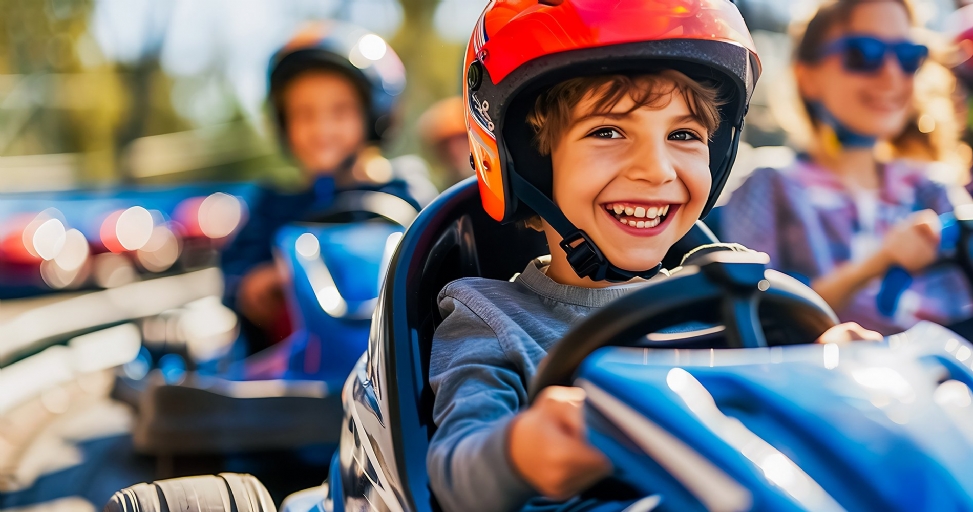
Let’s be honest. Buying a go-kart is a big commitment. There’s the maintenance, the storage, and the nagging worry about whether you’ve got everything just right. So, what if you could give them all the thrills of the track without any of the hassle?
Enter the go-karting experience day. It's the ultimate parenting hack: all the high-octane fun, zero long-term responsibility. You're trading a permanent fixture in the garage for a day of pure, organised, unforgettable adrenaline.
A Taste of the Real Deal
Imagine their face lighting up as they get strapped into a proper, professionally maintained kart, knowing they're about to hit a real circuit. Booking a session at a professional track is often the best present you can give.
These places are set up perfectly for junior drivers, taking all the guesswork out of it for you.
The benefits are brilliant:
Top-Tier Karts: Your child gets to drive a specially designed junior kart that's been serviced and safety-checked by people who actually know what they’re doing.
Full Safety Briefing: Every session kicks off with a professional briefing. They’ll learn the rules, the flags, and how to handle the kart before they even touch the pedals.
All Gear Included: Helmets, race suits, gloves – it’s all provided, making sure every driver has the right protective gear that fits properly.
It’s all done in a controlled environment designed to build confidence. With dedicated junior sessions, your eight-year-old will be on the track with others of a similar age, making the whole thing fairer and, most importantly, safer.
For an eight-year-old, a go-karting experience isn’t just about the driving—it's the whole event. Seeing their name on a leaderboard, racing against the clock, and maybe even a podium finish creates a core memory that a toy in the back garden just can't compete with.
The Rise of Indoor Tracks
The boom in impressive indoor go-karting venues has made these experiences a fantastic, all-weather gift. Rain can't stop play here, which is a massive win for any UK-based plan.
These indoor centres have become hugely popular, offering consistent track conditions, beefed-up safety features, and controlled noise levels that are ideal for families. It’s the perfect setting for go karts for 8 year olds.
This convenience is a godsend for gift-givers. It's a stress-free option for any occasion that delivers maximum excitement with minimum fuss. You can find a whole host of similar amazing ideas in our guide to adrenaline-fuelled gift experiences.
Budgeting for Your Go Kart Adventure
Let's talk money. Whether you’re dreaming of a shiny new go-kart parked in the garage or an action-packed day at the track, it’s smart to know the costs upfront. The price of go karts for 8 year olds can swing wildly, so figuring out a budget from the start will save you a headache later on.
If you’re looking to buy, the options are broad. Simple, sturdy pedal karts are a fantastic starting point and usually the kindest on your bank balance. Electric models, with their motors and zippy performance, are the next step up, costing more but delivering bigger thrills. It’s a bit like choosing between a new pushbike and an electric scooter – both are brilliant fun, but one has a bit more tech under the bonnet.
Comparing Purchase Costs to Experience Days
When you're doing the maths, don't just stop at the price tag. Owning a kart means thinking about maintenance, finding a place to store it, and buying all the safety gear. This is where go-karting experience days start to look like very clever value. Instead of one big payout, you’re buying a single, all-in-one ticket to fun.
A go-karting experience day wraps up the cost of the kart, time on a professional track, all the safety gear, and expert supervision into one straightforward price. It’s all the excitement with none of the long-term faff.
The Financial Breakdown
While a fun recreational kart for the garden has its price, the costs can rocket if this turns into a serious hobby. Proper entry-level racing karts can set you back anywhere between £3,000 and £8,000. Honestly, for most kids, that’s complete overkill. Rental karts at UK tracks are a far more practical and wallet-friendly way in. In fact, with over 60% of karting happening in the summer months, a track day makes for a perfect birthday treat.
A typical junior go-karting session often costs less than taking the family out for a meal, but the memory it creates is priceless. It’s a brilliant way to give a huge experience without a huge spend, which is why it’s such a popular choice. For more inspiration on great value presents, have a look at our guide to finding brilliant cheap gifts.
Common Questions from Go Karting Parents
Even after all the research, it’s completely normal to have a few last-minute wobbles. So, to wrap things up, we've pulled together the most common questions we hear from parents choosing a go kart for 8 year olds. Think of this as your final checklist for total peace of mind.
What Is a Good Top Speed for an 8-Year-Old's Go Kart?
For an 8-year-old, a go-kart with an adjustable top speed is the gold standard. A great place to start is around 6-8 mph. That’s brisk enough to feel like a proper thrill but slow enough for them to stay in complete control.
Once they've got the hang of it, a kart that can reach 10-12 mph is a fantastic next step. It’s the sweet spot between genuine excitement and sensible safety for this age group. Always, always go for a model with a parental speed limiter – it’s your best friend for matching the kart’s power to your child’s growing confidence.
Are Electric Go Karts Safe for an 8-Year-Old?
Yes, absolutely. Modern electric go-karts can be incredibly safe, as long as you choose a well-built model and lay down some ground rules. Look for the non-negotiables: a sturdy steel frame, a proper seatbelt, and decent brakes.
But the single most important safety feature on an electric kart is parental speed control. It lets you cap the speed, so there are no heart-stopping moments where they accidentally go faster than they can handle.
It also goes without saying that they should only ever be used under your watchful eye, in a wide-open space well away from traffic. With those boxes ticked, an electric kart is a wonderfully safe way to introduce them to the buzz of driving.
How Much Maintenance Does a Kids' Go Kart Require?
This really comes down to what kind of kart you get. Pedal karts are brilliantly low-maintenance; you’re mostly just looking at keeping the tyres pumped up and maybe adding a bit of oil to the chain now and then. Simple.
Electric karts, on the other hand, do need a bit more TLC. You’ll be charging the battery regularly (which can take 6-8 hours), and it’s wise to keep an eye on the brakes and wiring. That little bit of extra faff is why some families swerve the upkeep altogether and opt for one-off exciting days out instead.
Is My Garden Big Enough for a Go Kart?
That's the million-dollar question! A small or medium-sized garden is often more than enough for a pedal go-kart. It gives them plenty of space to get up to a decent pace, practise their turns, and have a brilliant time.
However, if you're eyeing up a zippier electric model, you’ll need a bigger, flatter, and more open area. Think long driveways, a quiet and traffic-free cul-de-sac, or a private paved space. You need to give them enough room to turn and brake safely without feeling hemmed in.